

Ticks are arachnids that make headlines almost every year as summer approaches. This is when the risk of tick bites rises significantly, driven by their peak activity period during warm and humid weather. If the only consequence were a painful bite, tick protection might not be such a priority. However, ticks are parasites that carry a range of serious diseases, including Lyme disease and tick-borne encephalitis. It takes very little to become a host for one of these pathogens, which is why effective protection should be a priority for anyone who spends time outdoors. The right method depends largely on the type of activity, the age of the person being protected, and personal preferences.
Ultrasonic Tick Repellent Devices — 21st Century Protection
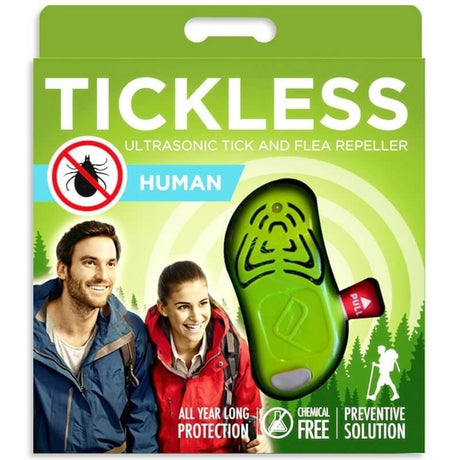
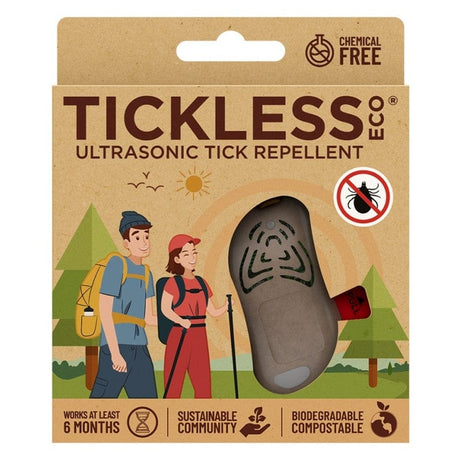
Among the most innovative approaches to tick protection are electronic ultrasonic repellent devices. Research into tick behaviour has revealed exactly how these parasites hunt: they detect potential hosts through body heat and exhaled carbon dioxide. Exposed skin and warmth are all a tick needs to strike.
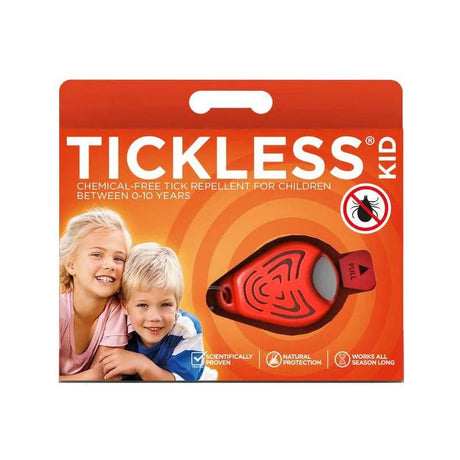
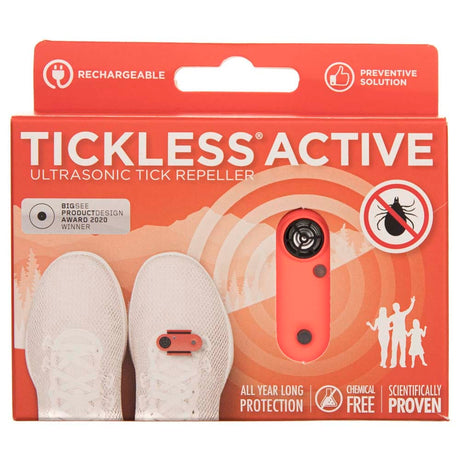
Ultrasonic tick repellents work by emitting a sound signal that interferes with the tick's sensory organs, effectively making the wearer "invisible" to the parasite. The tick's hunting mechanism is disrupted, and it cannot locate its target. Crucially, the ultrasonic frequencies used are completely inaudible to humans and household pets, so wearing the device involves no discomfort whatsoever.
These devices are available in specialised versions for different users — adults, children, pets, and even horses. Each variant is calibrated with an appropriate range of effectiveness. Most models are moisture-resistant, which means they function well in the damp conditions that ticks favour. However, they should not be fully submerged in water, so they are not the ideal choice for swimming or water-based activities. The device also needs unobstructed space to emit its signal effectively — tucking it deep inside a bag, for example, reduces its performance.









Balms and Roll-Ons — Topical Protection
A more traditional but still highly effective method of tick protection is the topical repellent — available as balms, creams, and roll-on formulations. These products create a chemical barrier on the skin that deters ticks from biting. One significant advantage of balms is that many formulations are water-resistant, making them a better choice than electronic devices for activities near lakes, rivers, or the seaside — environments where ticks are especially active.
When choosing a topical repellent, pay close attention to the active ingredient. The most common and well-researched compound is DEET (N,N-Diethyl-meta-toluamide), which has been used in insect and tick repellents since the mid-20th century. DEET is undeniably effective, but it is a synthetic chemical that has raised questions about long-term safety, particularly for sensitive skin. For those who prefer to avoid DEET, there are also formulations based on natural or alternative active ingredients.
Topical repellents do have some limitations. Most DEET-based products are not recommended for children under two years of age. Application requires covering all exposed skin thoroughly, which can be time-consuming. And even water-resistant formulas need reapplication after swimming or towel-drying, which means carrying the product with you throughout the day.
Sprays — Quick and Convenient
Insect and tick repellent sprays are among the oldest and most widely used protection methods. Their greatest strength is sheer convenience: a quick spray on clothing and exposed skin creates a mist of repellent that deters ticks from approaching. No complicated application process, no waiting time — sprays are ready to use at a moment's notice.
Most tick-repellent sprays rely on DEET as their active ingredient, available in concentrations ranging from around 9.5% for everyday use to 50% for intense outdoor activity in high-risk areas. Higher concentrations offer longer-lasting protection but also increase potential skin sensitivity. As with balms, most spray products carry age restrictions and are not suitable for very young children.
It is also worth noting that aerosol sprays are not the most environmentally friendly option. The propellant gases and chemical formulations raise legitimate ecological concerns. Nevertheless, the ability to apply protection quickly in any situation — whether on a hiking trail, at a campsite, or in the garden — keeps sprays firmly popular among outdoor enthusiasts.
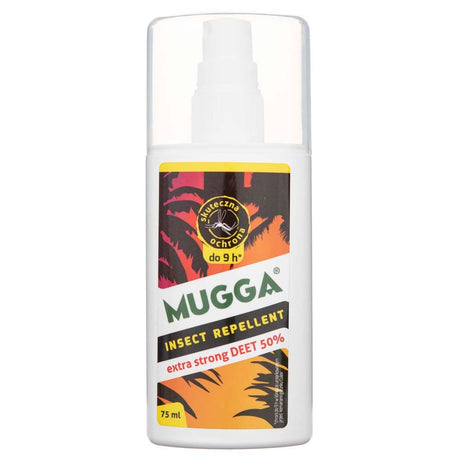


Mugga
Mugga Spray 50% DEET, hyönteiskarkotin - 75 ml
Normaalihinta €10.19Yksikköhinta€13.59 /100 ml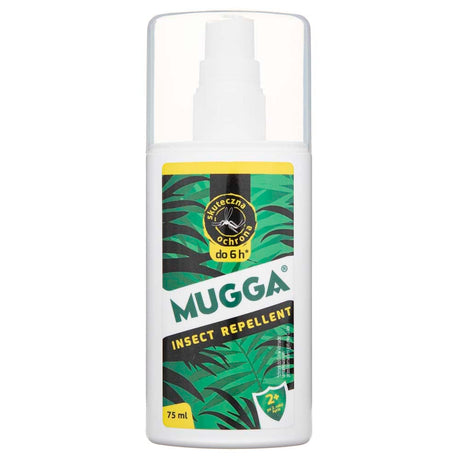


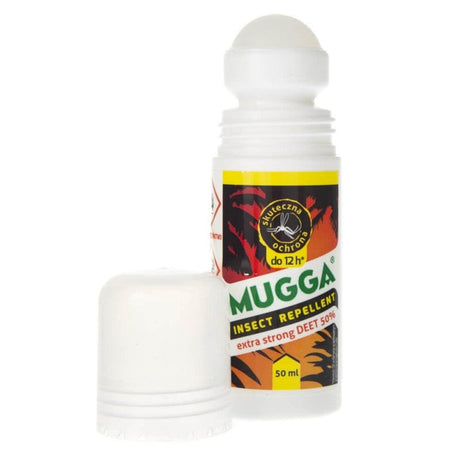

Mugga
Mugga Roll-On 50% DEET, hyönteiskarkotin - 50 ml
Normaalihinta €8.59Yksikköhinta€17.18 /100 ml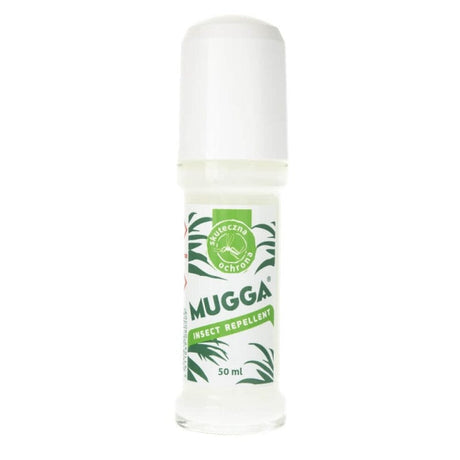

Mugga
Mugga Roll-On 20% DEET, hyönteiskarkotin - 50 ml
Normaalihinta €6.79Yksikköhinta€13.58 /100 ml


Tick Protection for Babies and Young Children
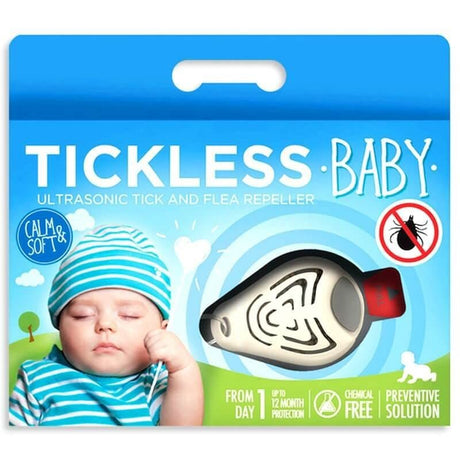
Protecting the youngest family members from ticks is both the most important and the most challenging task. Most chemical repellents — whether sprays, balms, or roll-ons — are not approved for use on infants and toddlers under two years of age. This is where ultrasonic devices become invaluable.
The Tickless Baby range is specifically designed for newborns and infants. These compact devices clip easily onto a pram, cot, or baby carrier, emitting ultrasonic frequencies that deter ticks without any chemical exposure whatsoever. For parents who want to ensure their child is protected during outdoor walks, park visits, or garden time, an ultrasonic repellent is often the only viable option — and fortunately, it is a highly effective one.
Tick Protection for Pets
Ticks do not discriminate between human and animal hosts. Dogs are particularly vulnerable during walks in parks, forests, and long grass. Tickless offers dedicated ultrasonic repellents for dogs and horses, designed to attach to collars or harnesses. These provide chemical-free protection throughout the day, which is especially important for animals that may lick or groom treated areas if topical repellents are used.
For the full range of protection options — from ultrasonic devices and electronic tick repellents to DEET-based sprays and roll-ons — explore the insect and tick protection collection at Medpak.
Which Method Is Best?
There is no single "best" tick protection method — the right choice depends on who needs protecting and what they are doing. Here is a practical overview:
- Everyday outdoor activity (hiking, gardening, park walks) — ultrasonic devices offer the most convenient, chemical-free, all-day protection
- Water-based activities (swimming, kayaking, beach days) — water-resistant balms and roll-ons are the better choice, as electronic devices should not be submerged
- Quick trips or spontaneous outings — sprays provide the fastest, most flexible application when time is short
- Babies and infants — ultrasonic devices are virtually the only safe option, as chemical repellents carry age restrictions
- Dogs and horses — dedicated ultrasonic pet devices avoid the risks of chemical ingestion through grooming
- High-risk areas (dense forests, tropical regions) — combine methods: an ultrasonic device plus a high-concentration DEET spray for maximum coverage
In many situations, combining two methods provides the most comprehensive protection. An ultrasonic device worn on the belt paired with a spray applied to clothing, for example, creates multiple layers of defence that significantly reduce the risk of a tick bite.
Key Takeaway: Ticks carry serious diseases, and effective protection is essential for anyone spending time outdoors. Ultrasonic devices offer the most innovative, chemical-free solution — suitable for all ages including newborns. Balms and sprays provide effective topical alternatives, particularly for water-based activities. For the best results, consider combining methods based on your specific activity and environment.
Tämä artikkeli on tarkoitettu vain tiedoksi, eikä se korvaa lääkärin neuvoja. Jos sinulla on terveysongelmia, olet raskaana, imetät tai käytät lääkkeitä, kysy neuvoa lääkäriltä tai apteekista. Ravintolisät eivät korvaa monipuolista ruokavaliota.


