

South America's tropical forests are often described as the world's largest natural pharmacy. Scientists estimate that up to 80% of plant species found in these jungles possess properties of medicinal interest — and many of them, despite centuries of traditional use, are only now being studied in depth by modern researchers. Pau d'arco, derived from the bark of a towering tropical tree, is a compelling example. Here is what the science and tradition tell us about this remarkable plant.
What Is Pau d'arco (Red Lapacho)?
Pau d'arco is a substance derived from the inner bark of tropical trees belonging to the Tabebuia genus — most commonly Tabebuia impetiginosa. While the leaves and flowers of the tree are also used in some preparations, it is the bark that contains the highest concentration of active compounds. Even more specifically, the most bioactive layer is the youngest, innermost portion of the bark — the living cambium layer that has not yet fully integrated into the woody trunk.
The wood itself has long been prized for its density, hardness, and striking natural resistance to fungal growth and decay — a characteristic that, as the story goes, first drew attention to the tree's potential in healing.
From Bows to Healing Teas — A Brief History
Infusions made from Lapacho bark have been used for centuries by indigenous peoples across Peru, Bolivia, Paraguay, and Brazil. Historians suggest the tree was initially valued for its exceptionally hard wood, used in the crafting of bows — the name Pau d'arco comes from Portuguese and translates literally as "bow wood." Tribal healers soon noticed that the wood resisted mould and fungal growth even after the tree was felled, and that same principle was applied to treating infections and other ailments.
Pau d'arco entered the wider scientific literature in 1873, when its biomedical properties were first formally documented. The plant is also known by several indigenous names — ipê roxo (meaning "red thick bark"), taheeho ("ant wood"), and tajy ("strength and vigour") — reflecting the diversity of cultures that independently discovered and adopted it.
Active Compounds and Properties
The primary active constituents of Pau d'arco are lapachol and beta-lapachol, two naphthoquinone compounds that have been the focus of most modern research. But the bark contains a broader array of bioactive compounds:
- Quercetin — a flavonoid with antioxidant activity that also contributes to immune system support
- Carnosol — studied for its potential activity against abnormal cell proliferation
- Coenzyme Q10 — a well-known antioxidant compound
- Alkaloids — a broad class of organic compounds widely used in pharmaceutical contexts for their diverse biological activities
- Steroidal saponins — contribute to fat digestion and have anti-inflammatory properties
- Hydroxybenzoic acids — help protect against certain pathogens
Together, these compounds contribute to Pau d'arco's broad spectrum of traditionally documented and scientifically investigated effects: anti-inflammatory, antimicrobial, antifungal, antioxidant, immune-modulating, and cardiotonic.
Traditional and Modern Applications
Pau d'arco's applications have evolved considerably from its origins, but the range remains impressively broad. It is used today in natural health contexts for inflammatory conditions of the respiratory tract, urinary system, liver, and joints — particularly in rheumatological complaints. Research has also explored its use in anaemia management.
Gut Health and Digestive Support
One of Pau d'arco's better-documented effects is its influence on the gastrointestinal tract. It is thought to reduce excessive gastric acid secretion while promoting mucus production in the stomach lining — a combination that makes it of particular interest for anyone dealing with gastric or peptic ulcer conditions. It may also help relieve symptoms associated with certain autoimmune gut conditions, including non-specific bowel inflammation and psoriasis. Explore our broader range of digestive health supplements for complementary options.
Immune and Antimicrobial Support
Perhaps the most widely recognised traditional use of Pau d'arco is as an antimicrobial agent — active against bacterial, viral, and fungal pathogens. Its immunostimulating properties may contribute to a more resilient immune response, making it a natural complement to other immune support supplements during periods of increased vulnerability.
Menopause and Women's Wellness
Pau d'arco has traditionally been used to help manage certain symptoms associated with menopause. It may reduce the incidence of intimate infections — a common consequence of shifts in the urogenital environment — and can contribute to blood pressure regulation. Some researchers have also pointed to its potential role in supporting healthy weight management during this transition, particularly when combined with regular physical activity, given its possible effect on pancreatic lipase (the enzyme involved in fat digestion and absorption).
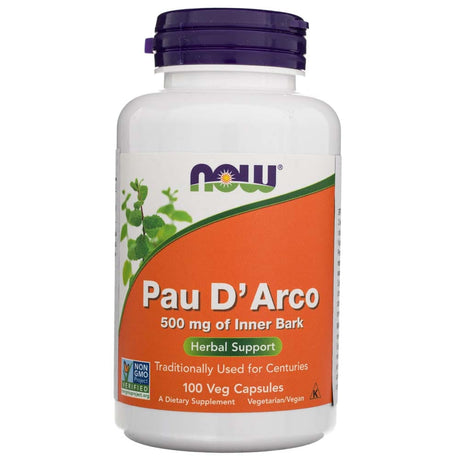


Now Foods
Now Foods Pau D'Arco 500 mg - 100 Veg-kapselia
Normaalihinta €8.59Yksikköhinta€0.09 per tuote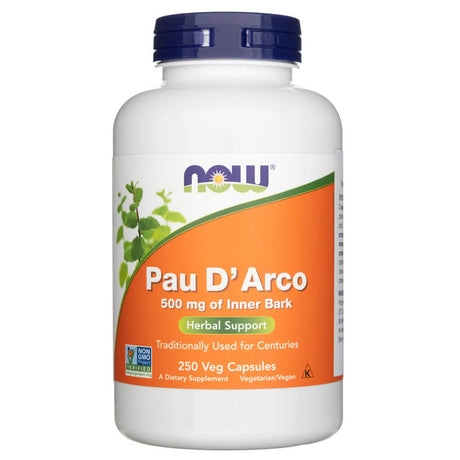


Now Foods
Now Foods Pau D'Arco 500 mg - 250 Veg-kapselia
Normaalihinta €18.99Yksikköhinta€0.08 per tuote


Aliness
Aliness Pau d'Arco (Lapachon kuorijauhe) 500 mg - 100 Veg Kapselit
Normaalihinta €8.79Yksikköhinta€0.09 per tuote


Exploring the Amazon's Other Medicinal Herbs
Pau d'arco is far from the only botanical treasure to emerge from South and Central America. Cat's Claw (Uncaria tomentosa), known in the Andes as vilcacora, shares many of Pau d'arco's traditional applications — anti-inflammatory, immune-modulating, and gut-supportive — and the two are sometimes used in combination. Graviola (Annona muricata) is another tropical species attracting growing scientific interest. Quercetin, one of the active compounds found naturally within Pau d'arco itself, is also available as a targeted standalone supplement and has become one of the most extensively studied plant-derived flavonoids in nutrition science. Browse our full herbal supplement range to explore these and many other botanicals.


Now Foods
Now Foods Kissan kynsi 500 mg - 100 Veg-kapselia
Normaalihinta €9.49Yksikköhinta€0.09 per tuote


Hepatica
Hepatica Vilcacora (Kissan kynsi) - 60 kapselia
Normaalihinta €7.09Yksikköhinta€0.12 per tuote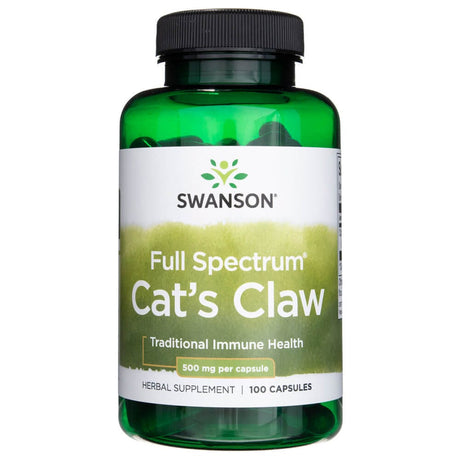


Swanson
Swanson Täyden spektrin kissankynsi 500 mg - 100 kapselia
Normaalihinta €8.59Yksikköhinta€0.09 per tuote
Doctor Life
Doctor Life Graviola-uute 500 mg - 100 kapselia
Normaalihinta €18.79Yksikköhinta€0.19 per tuote


Aliness
Aliness Luonnollinen kversetiini 250 mg - 100 Veg-kapselia
Normaalihinta €16.69Yksikköhinta€0.17 per tuote


Hepatica
Hepatica Kversetiini 316 mg - 120 Veg-kapselia
Normaalihinta €15.49Yksikköhinta€0.13 per tuote


Swanson
Swanson Kversetiini 475 mg - 60 Veg-kapselia
Normaalihinta €19.99Yksikköhinta€0.33 per tuote


Forms, Quality, and What to Look For
Pau d'arco supplements are available in several forms — capsules, liquid extracts, dried bark for infusion, and powder. The differences are largely practical: capsules offer convenience and precise dosing, while liquid extracts may provide faster absorption. Whatever the format, sourcing matters. Look for products from reputable suppliers that specify the part of the plant used (inner bark, not outer bark or wood), ideally with documented bark-to-extract ratios or standardised lapachol content.
Interest in Pau d'arco has moved well beyond the fringes of traditional medicine. Ongoing research into its potential roles in oncology, vascular health, and metabolic support continues to expand what we know about this remarkable bark. For now, its established applications — immune modulation, antimicrobial support, digestive health, and anti-inflammatory activity — already give it a well-justified place in a thoughtful supplement routine.
Tämä artikkeli on tarkoitettu vain tiedoksi, eikä se korvaa lääkärin neuvoja. Jos sinulla on terveysongelmia, olet raskaana, imetät tai käytät lääkkeitä, kysy neuvoa lääkäriltä tai apteekista. Ravintolisät eivät korvaa monipuolista ruokavaliota.


